Every family has stories that hover on the edge of memory. A few live in photo albums or surface during holiday conversations, but most drift between generations until the details fade or warp. When children hear them at all, it’s often in fragments. What they rarely receive is a complete story that feels like it belongs to them.
The irony is that the youngest listeners are the ones who need those stories most.
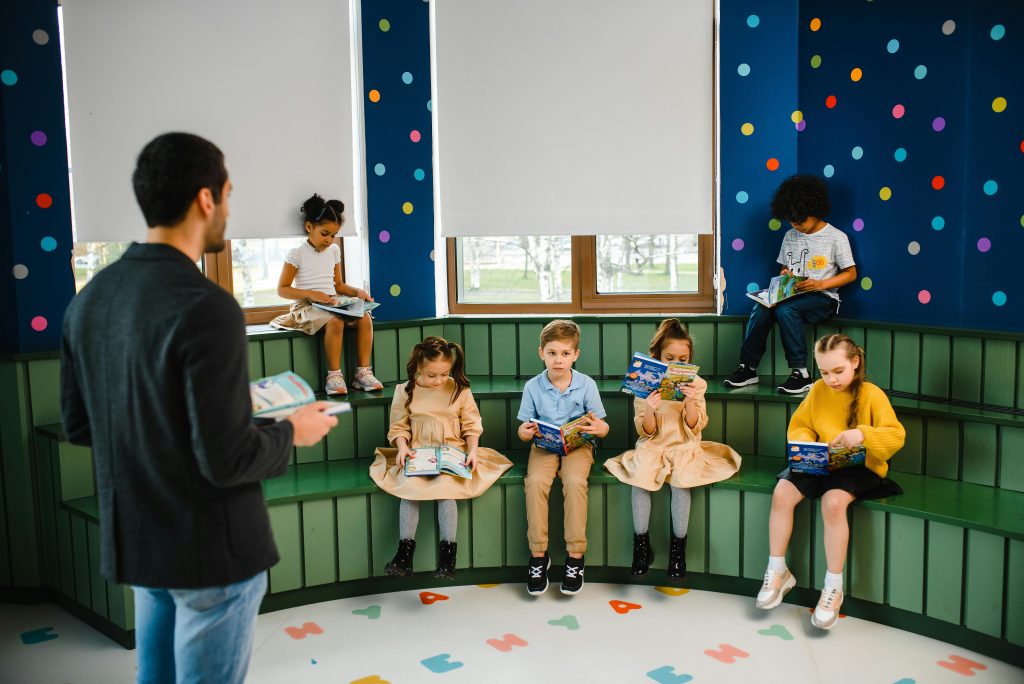
Psychologist Robyn Fivush spent years studying the link between family narrative and resilience. As she explains, “When children hear stories about their family, they learn that they belong to something bigger than themselves. They learn that their family has faced difficult times before and come through them, which gives them confidence that they can do the same.”
Family stories give children context for who they are and where they fit in the long line of lives that led to theirs.
Yet the way most families preserve their histories — dense timelines, adult language, complex relationships — doesn’t translate easily for children. A six-year-old can sense the emotion behind a story of immigration or struggle, but only if the telling speaks in a rhythm and vocabulary that fits their world. That’s the challenge many families face — how to protect truth without overwhelming comprehension.
Professional ghostwriters have begun tackling that problem directly, helping families adapt their stories into age-appropriate formats. A children’s family history book can turn ancestral experiences into adventures, lessons, or moments of courage a child can absorb. Done well, it becomes both literature and legacy — a way to keep history alive through the very people who will one day inherit it.
Why Family History Matters to Children
Children don’t experience history the way adults do. For them, the past isn’t a sequence of dates or genealogical charts. It’s a patchwork of faces, stories, and feelings that explain who they are. Psychologists and family researchers have long found that children who know their family history tend to show stronger emotional resilience and handle setbacks more easily. In part, this is because they see themselves as part of a larger story that has already weathered hardship.
A children’s family history book reminds a child that strength, creativity, and compassion have roots that stretch back generations.
The late novelist Ralph Ellison captured this connection between story and identity when he wrote, “When I discover who I am, I’ll be free. Until I’ve told the story of how I got here, I remain a fragment seeking its meaning.” That search for coherence begins early. When children learn where they come from — who crossed oceans, who started over, who persevered — they begin building a sense of self that isn’t easily shaken by circumstance.
For parents and grandparents, these stories serve another purpose. Told with care, a narrative about an ancestor’s choices becomes a mirror for a child’s own developing sense of right and wrong. This is what makes these projects so powerful. They invite curiosity instead of delivering lessons. A well-constructed family history for young readers reminds both teller and listener that identity is not something a child discovers alone.
The Real Challenge of Simplifying History
Every family has chapters that resist retelling. Some are painful. Others are complicated. A few are simply too tangled for a young reader to follow. Turning a multigenerational story into something a child can grasp requires careful decisions about what to reveal, what to defer, and how to express truth in language that meets a child where they are.
This is where many well-intentioned families stall. Adults often write as if their audience already understands the weight of topics like migration, loss, or perseverance. Children don’t. They respond to character, rhythm, and image, not abstraction. The writer’s task is to preserve emotional honesty while trimming away what a child cannot yet process.
It’s a subtle balance. The story must retain enough complexity to respect the truth, while being shaped so a young reader can feel it rather than be instructed.
James Baldwin once said, “Children have never been very good at listening to their elders, but they have never failed to imitate them. They must, they have no other models.” A child watching an adult handle family history learns how truth can be approached with care and courage. When writers model that sensitivity on the page, they teach discernment — how to look at the past without fear or judgment.
Professional ghostwriters working on family projects spend much of their time in this translation zone. They examine tone, vocabulary, and pacing through the lens of age comprehension. The best adaptations feel effortless, but they are anything but simple. They are the result of deep listening and editorial restraint — the craft of saying just enough to let a young mind fill in the rest.
The Ghostwriter’s Process
A ghostwriter entering a family history project begins with a room full of voices. Some belong to the living. Others live in letters, recordings, or boxes of paper that smell faintly of cedar. The writer’s job is to hear what exists beneath the details.
After interviews and note-taking come long hours of reading and sorting. Timelines are traced. Dates are checked. Events are mapped to see how they fit together. Early on, the focus is finding a thread that will hold a child’s attention. Some projects hinge on a single moment. Others unfold through smaller stories that echo the same value again and again. Once that spine emerges, the book begins to take shape.
Writing for children demands restraint. It looks effortless only after many failed drafts. The ghostwriter trims and tests every line aloud, measuring how it sounds when spoken slowly, because most of these books are read that way. A child doesn’t need every fact, but they need to feel the weight of what happened. The writer keeps that weight visible — just light enough to carry.
Accuracy anchors the work. Memory alone can warp timelines, so professionals verify details using sources such as ship manifests, census records, and birth certificates. When the truth is solid, the story can move freely around it. When a moment is painful, the writer adjusts tone rather than rewriting the past. The goal is understanding without erasure.
Revisions unfold gradually as families read early drafts and recognize pieces of themselves they didn’t expect to see. Corrections emerge not because the writer misunderstood, but because family truth is always a negotiation. The final manuscript finds balance only when everyone feels seen — when it carries the pulse of family memory while moving with a clarity children instinctively follow.
Making It Visually and Emotionally Engaging
Once the story finds its words, the next challenge is helping those words breathe on the page. Children read with their eyes first. They scan for color, motion, and faces that signal how the story feels before they understand what it says. The visual language of a book — its illustrations, layout, and rhythm — matters as much as the prose.
Professional ghostwriters often collaborate closely with illustrators, designers, or family members who hold the visual archive. During this stage, the writer guards tone, ensuring the art and text speak the same emotional language. In picture books, that language is sparse but vivid. A single page might capture an ancestor stepping off a train or surveying a new landscape. Each image carries just enough emotional charge to hold a young reader still for the next sentence.
For chapter books aimed at older children, illustrations shift toward atmosphere. Maps, family trees, and period sketches ground the imagination without interrupting the story’s pace.
Families often bring their own materials to the table — letters, recipes, tools, heirlooms. A skilled writer or art director knows how to weave these in without clutter. A photograph reproduced too literally can feel stiff. When redrawn or stylized, it becomes a bridge between eras. At its best, visual storytelling carries emotions a child cannot yet articulate. The images open the door, and the writing invites them to stay.
Bringing It to Print
When writing and illustrations align, the project enters its most tangible stage. Ideas leave documents and take on physical weight. Families often expect this phase to move quickly, but printing a children’s family history book is its own craft. Every decision — paper, layout, binding — shapes how the story feels in a reader’s hands.
A professional ghostwriter often remains involved through production, working alongside designers or production managers. Together, they refine page flow so the rhythm of the text matches the rhythm of turning pages. Short paragraphs and generous white space help young readers stay engaged. Font choices reinforce tone. Families are often surprised by how much design carries memory.
A color palette might echo the sepia tones of an old photograph. Chapter headers may draw from family handwriting or signatures, turning archival fragments into quiet motifs. These details remind children that the book belongs to a real lineage.
Families choose different paths to print. Some opt for limited hardcover runs meant to last for generations. Others prefer softcover or digital editions shared through tablets and family clouds. Print-on-demand services have made small runs more accessible, but design integrity still matters. A poor layout can undo months of careful writing. A thoughtful one carries the story naturally from cover to colophon.
A finished book gives the story permanence. It signals to a child that their family’s experiences were worth recording in ink and paper. That knowledge can quietly reshape how a young person sees their place in the world. Publishing isn’t the end of the process. It’s the moment when memory becomes artifact, ready to be rediscovered again and again.
As Ursula K. Le Guin once wrote, “The story, from Rumpelstiltskin to War and Peace, is one of the basic tools invented by the human mind for the purpose of understanding.” That is what this kind of storytelling offers. Understanding. When a family tells its past in a child’s language, it gives that past room to live again as a living inheritance.
Partnering with The Writers For Hire
By the time a family decides to create a book for its youngest members, most of the raw material already exists. The memories are there. So are the boxes of letters and the faintly yellowed photographs tucked between documents. What’s missing is structure — a clear, confident hand that can translate fragments into a cohesive story. That is the role The Writers For Hire steps into.
Families arrive at different stages. Some bring rough drafts they can’t quite finish. Others come with nothing but conversations and a desire to preserve them. Ghostwriting is an invisible art, but its imprint is visible in every well-shaped paragraph. Writers trained in journalism, memoir, and technical editing bring clarity to stories that might otherwise drift into sentimentality or confusion.
They understand that tone and trust matter more than flourish. The work is slow, deliberate, and rooted in respect for the people whose lives shape the text. Families recognize their voices in the lines, yet the prose moves with a precision only professional craftsmanship provides. What emerges is a legacy built to last beyond the current generation’s memory.
Every family carries a library within it. Some volumes are spoken. Some are hidden. Others risk being forgotten. The difference between a memory that fades and a story that endures often comes down to how it’s told — and who takes the time to write it down. A children’s family history book is more than a keepsake. It’s a promise that the next generation will know where they came from, not through dusty records, but through living, human stories shaped for their eyes and ears.
If you’ve thought about preserving your family’s history but haven’t known where to start, this is the moment. The Writers For Hire can help you gather what you have, fill in what’s missing, and shape it into a book your children and grandchildren will return to for years. Their team brings skill in structure and style, along with the sensitivity required to honor every life behind the story. Give the next generation something they can hold — and recognize as their own.