

They say that behind every great man stands a great woman. That was definitely the case for Winston Churchill.
Behind Churchill’s famous speeches and wartime leadership stood someone just as remarkable — his wife, Clementine. History books overflow with Winston’s story, but Clementine’s? Far fewer people know the woman who shaped, challenged, and steadied him through some of the world’s darkest hours.
Author Sonia Purnell set out to change that. Her 2015 biography, Clementine: The Life of Clementine Churchill, paints a vivid, intimate portrait of the woman Winston once credited with making “my life and any I have done possible.”
Clementine’s story reminds us of something bigger: every life holds meaning worth remembering. A legacy story isn’t just a record of dates and events — it’s a living narrative that captures values, struggles, and impact. And when told with the depth of a novel, it can resonate for generations.
If you’re hoping to capture the story of someone you love, here are a few ways to uncover and share the heart of their journey.
Gathering the Raw Materials
Before you sit down to start writing, you’ll want to collect the pieces of the puzzle. By far, your most important resource will be people.
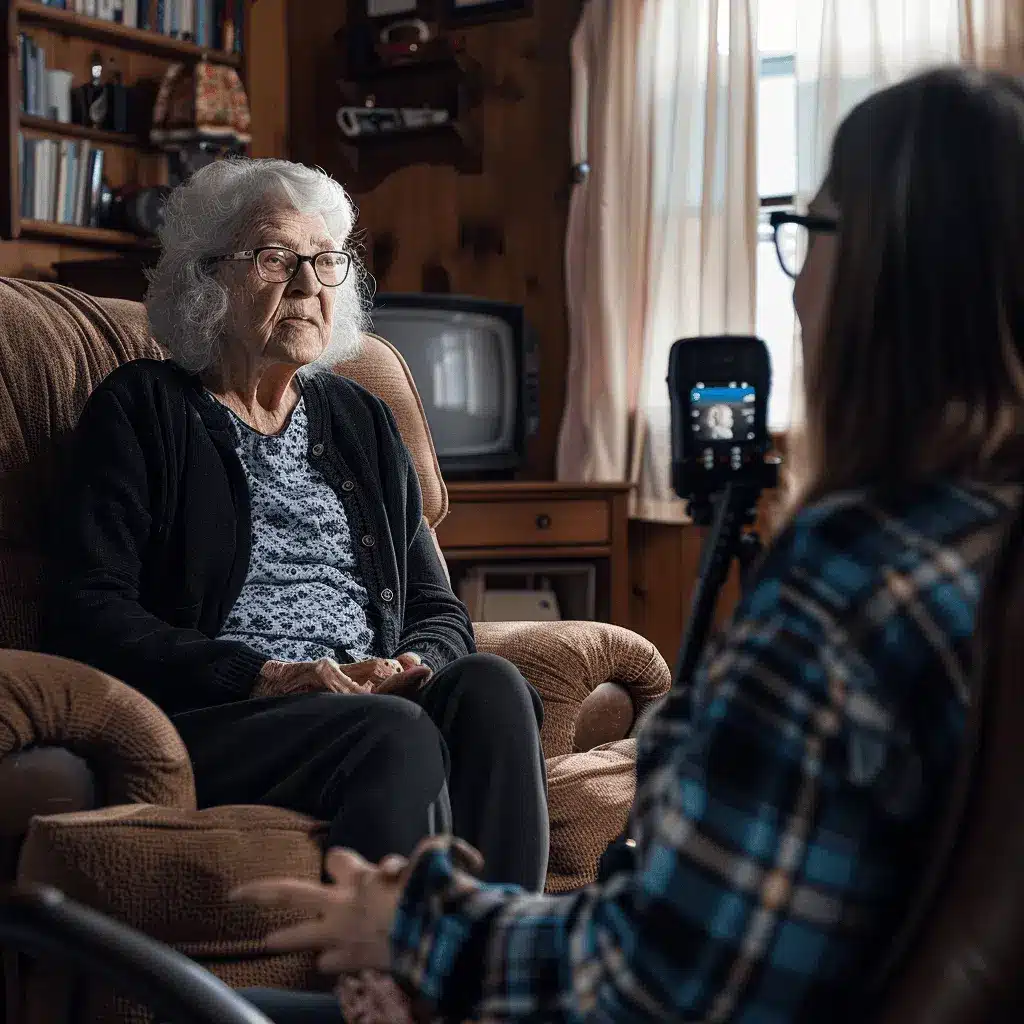
If the subject of your story is still living, carve out ample time to sit and talk.
Ask open-ended questions about their childhood. What were some of their proudest moments? What were their hardest days? What lessons did they learn along the way?
You might be surprised at what surfaces.
And be sure to record these sessions (with their permission, of course) so you don’t lose a single word.
Next, reach out to close family members and friends. You’ll want to include a variety of perspectives that can bring new layers to the story and fill in missing pieces.
Purnell, when researching Clementine: The Life of Mrs. Winston Churchill, leaned heavily on personal accounts:
“I think you have to talk to as many people as possible who are still alive. I was very fortunate to find five or six of her PAs who were still living. They gave a great, intimate, personal view of her. You have to look at as many sources as you can.”
From there, start collecting physical items:
- Letters or personal notes
- Journals or diaries
- Family photo albums
- Birth, marriage, or military service records
- Cultural or religious artifacts
Don’t forget to include historical context. Did they live during wartime? How did major world events affect their lives? What was it like to live during that time?
Adding this sort of background gives depth to the story and helps readers connect with the person whose story you’re telling.
Timelines are your friend here. Plot out major life events such as birth, education, marriage, children, milestones, and major achievements. This can help you see the bigger picture — and build a cohesive story later on.
Find the Emotional Core of Their Story
What made this person them?
That’s the question that should guide your writing. A powerful legacy story isn’t just about what happened, but how those events shaped that person and what they left behind. Start by looking for recurring themes like:
- Resilience through hardship
- Deep love or meaningful relationships
- Acts of personal sacrifice
- Personal growth or transformation

Maybe your loved one overcame poverty to start a successful business. Perhaps they were the steady rock in a large, chaotic family. Or maybe they never saw themselves as extraordinary — but the quiet way they showed up for others said everything.
Defining moments will start to appear.
Think about your subject’s family reunion. Which humorous stories about them would be told year after year? Was there a major (or minor) event that changed the course of their life?
Don’t be afraid to get granular. Sometimes the smallest moments can pack a big punch.
Whenever possible, include direct quotes or short anecdotes. These little windows into their voice and personality can add authenticity and emotional weight.
By tapping into the emotional core of your subject’s story, you can create interest and empathy. By the end of your book, your readers should feel like they know the person.
Structuring the Story
Okay — you’ve gathered all the pieces and you’re ready to put them together. Where do you start?
The answer is up to you. Think about the message you want to share, and go from there.
Some common structure approaches that work well include:
1. Chronological
When in doubt, start at the beginning and move forward through time. This approach works especially well for full biographies or long-form legacy books.
2. Thematic
Group the story by themes like “Service,” “Family,” “Faith,” or “Challenges.” This approach highlights what your subject brought to the world and what mattered most to them.
3. Hybrid
You don’t need to stick to just one approach. Blending them may be the answer. Maybe you use a timeline as the backbone but pause to explore certain themes in depth along the way.
Break your story into chapters or short sections to keep it digestible.
Add quotes and bits of dialogue where possible to make the narrative feel personal.
Most of all, balance facts with feeling.
The story needs to be accurate, but don’t lose the emotional heart of it. It’s okay to include interpretations or reflections if they help show the bigger picture.
Turn to the Pros: Ghostwriters and Genealogists
Writing a legacy story can be an emotional and time-consuming project. If you feel stuck or overwhelmed, it might be time to turn to a professional writer or genealogist.
A good ghostwriter knows how to shape your raw materials into a compelling story, drawing out emotional nuance and organizing the narrative with clarity. They bring experience and an outside perspective that can make the process smoother and more focused.
Genealogists, on the other hand, are experts at uncovering long-lost records and tracing family lineage. They can help fill in gaps — especially if your story spans generations or continents.
Bringing in outside help doesn’t mean giving up creative control. It’s about having a partner who can elevate the story to ensure it truly honors your loved one.
Final Touches and Sharing

Once you’ve finished writing the story, take a moment to relax and pat yourself on the back. Great job!
Then — it’s time to get back to work.
Consider adding visuals to take the legacy to another level. Scan in family photos, include a family tree, or add personal letters or key documents. These extras can help make the story more engaging and bring it to life for your readers.
No matter how smooth you think the writing process went, it will need a bit of polish. Reading it aloud can help you catch parts that aren’t as clear or fluid as you’d like.
Share it with a trusted family member to check for tone, accuracy, and readability. Clean up awkward phrasing or anything that feels unclear.
Next, it’s time to think about format.
Do you envision a printed book, a digital archive, a private blog, or a family website? Each has its benefits. A little research can help you pick the best format for your story.
You created this labor of love so that your loved one’s story will live on. Share it. Give copies to family members. Add it to your family’s historical records. If your loved one was involved in a church, school, or local organization, consider offering a copy for their archives.
You’ve created a story that speaks across generations. That’s a gift no one will forget.
| Need help writing your book? Contact us today to learn more about our ghostwriting services. Let us help bring you story to life. |