

One Life Story, Many Paths
Every life contains a multitude of layers — personal triumphs, private struggles, and the echoes of generations past. So when it’s time to put those experiences into book form, many writers ask:
What kind of story am I telling? Is it mine alone, my family’s, or both?
This is one of the most foundational decisions in the memoir-writing process, and it will shape everything that follows: tone, structure, content, and even the intended audience.
If you’re working with a ghostwriter, this conversation often happens before the first interview. It’s not about limiting your story — it’s about finding the focus that makes your message land.
Below, we explore the three most common structures for life story projects: the personal memoir, the family legacy book, and the hybrid memoir. Each option has its strengths, its challenges, and its own unique storytelling rhythm.
1. The Personal Memoir: A Close-Up on One Life
A personal memoir centers on an individual’s lived experience. It may follow a chronological path, explore a specific chapter of life (such as surviving an illness or building a career), or revolve around a theme like identity, loss, or resilience.
When this structure works best
This format is especially well-suited for writers who want to explore their own path in depth.
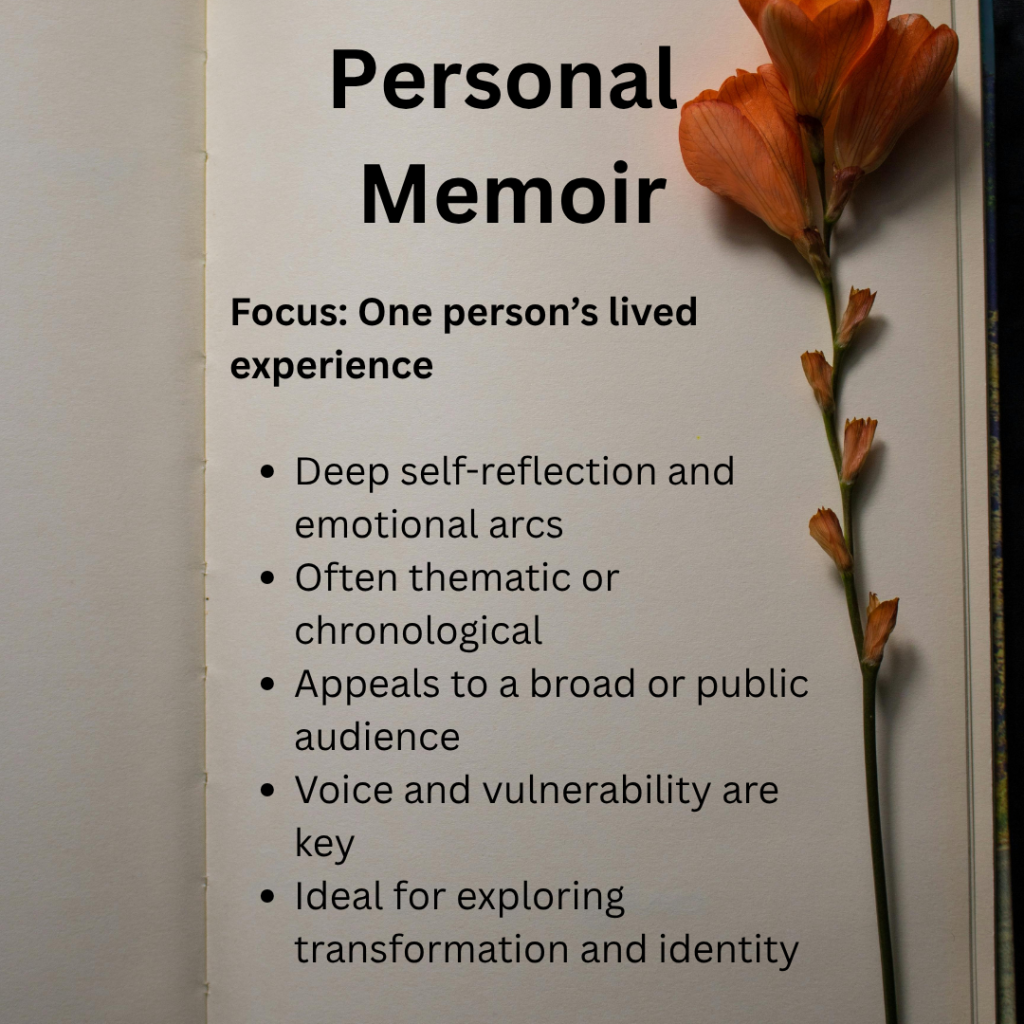
A personal memoir works best in the following situations:
- The story is grounded in a deeply personal journey.
- The author wants to reflect on transformation, choices, or lessons learned.
- There’s a desire to connect with others through shared experience — this may include a public or professional audience, not just family.
What readers expect:
Memoir readers are drawn to voice, vulnerability, and insight. They’re not just interested in what happened, but how it felt, what it meant, and how it changed the author. They want to see emotional arcs, internal conflict, and the evolution of perspective over time.
Common challenges:
- Choosing what to include (and what to leave out). Most lives contain dozens of potential stories. The key is selecting the ones that support the memoir’s core theme or emotional throughline.
- Finding the right level of honesty. Memoirs often touch on trauma, regret, or family tension. Writers need to navigate truth-telling with care and intention.
- Avoiding the “list of events” trap. A memoir is not just a biography. Without narrative focus, even dramatic stories can feel flat or disconnected.
How ghostwriters support this format:
A skilled ghostwriter listens for patterns and meanings behind the stories being told. They help identify a central theme, structure the timeline for clarity and impact, and ensure that the tone matches the author’s intent — whether the book is deeply introspective, quietly inspiring, or light and humorous.
2. The Family Legacy Book: A Multigenerational Portrait
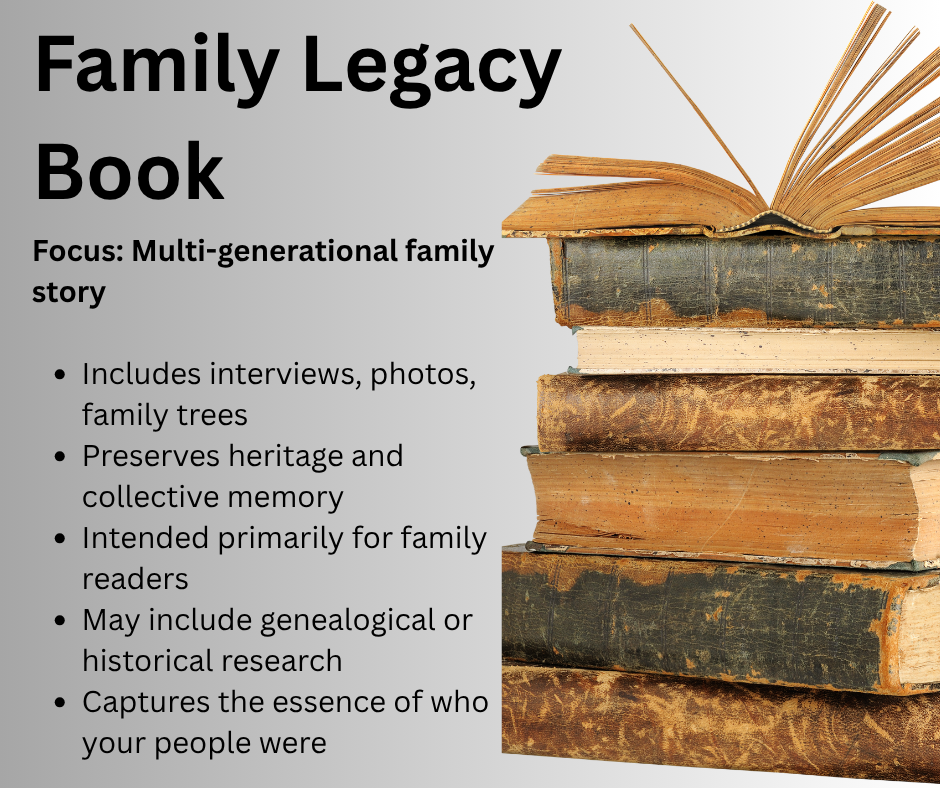
Legacy books capture the collective story of a family. These often trace ancestry, cultural heritage, immigration experiences, or the evolution of a family business. They may include interviews, historical context, old photos, family trees, and archival documents — creating a rich tapestry that connects past to present.
When this structure works best
A family legacy book is ideal for capturing the bigger picture — stories that span generations and preserve a shared history. This structure works best when:
- The project is designed to preserve stories across generations.
- The author wants to document family heritage, especially before memories are lost.
- The intended audience is primarily family members, not the general public.
What readers expect:
Legacy readers — often children, grandchildren, or extended relatives — expect both factual information and narrative warmth. They want to understand where the family came from — literally and emotionally. A well-crafted legacy book offers more than dates and names; it paints a vivid portrait of who these people were and what shaped their lives.
Common challenges:
- Conflicting memories or gaps in knowledge. Family members may disagree on key details — or remember things differently. Authors must decide how to handle those discrepancies: include both versions, choose one, or acknowledge the uncertainty.
- Over-inclusion. When every branch of the family tree wants to be represented, the project can quickly balloon. Without focus, the narrative can become too sprawling to hold the reader’s attention.
- Sensitive topics. Family stories often include difficult material: estrangement, trauma, racism, mental illness, or war. These require thoughtful treatment and strong ethical choices.
How ghostwriters support this format:
Ghostwriters act as story architects — helping authors collect, curate, and shape multiple voices into a coherent whole. They may conduct interviews, cross-check timelines, build structures around themes (rather than strict chronology), and help balance fact-finding with emotional nuance.
Many families also choose to work with a ghostwriter who specializes in genealogical research and historical storytelling. This kind of collaboration can add depth, accuracy, and context to the narrative — especially when dealing with older records, immigration stories, or cross-cultural histories. These ghostwriters know how to interpret census data, ship manifests, and regional histories and seamlessly integrate them into a readable, compelling story.
Whether the focus is preserving family culture, honoring elders, or creating a keepsake for future generations, ghostwriters help set expectations early — clarifying how deep the book will go, how many voices will be included, and what role research will play in shaping the final story.
3. The Hybrid Memoir: Where Personal and Family History Intersect
Some stories live in the space between the individual and the collective. A hybrid memoir weaves personal experiences with family history, often showing how the author’s life has been shaped by cultural inheritance, generational dynamics, or long-standing family patterns.
This is especially common among writers with immigrant roots, bicultural identities, or strong intergenerational bonds.
When this structure works best
A hybrid memoir blends personal experience with family and cultural history, creating a layered and reflective narrative. This approach works best when:
- The author’s story is deeply tied to family history, culture, or generational identity.
- Both personal and family perspectives feel essential to understanding the narrative.
- The book is written for both family members and a broader audience — those who may connect with shared cultural or historical experiences.

What readers expect:
Readers of hybrid memoirs expect a layered experience. They want to follow a personal journey, but also learn about the forces that shaped it — whether that’s migration, faith, social change, or family trauma. The transitions between self and family must feel seamless, not disjointed.
Common challenges:
- Complex structure. These books often shift between timelines and perspectives, which can be disorienting without clear anchors.
- Balance. If too much focus shifts to family history, the personal voice can fade. If it stays too personal, the broader context can feel underdeveloped.
- Tone and consistency. Blending reflective memoir with documentary-style legacy writing requires intentional voice management.
How ghostwriters support this format:
Ghostwriters help authors organize the narrative architecture — mapping how chapters might move between individual moments and generational insight. They ensure the storytelling stays cohesive, even if the structure is non-linear or layered.
They can also help guide decisions about when to zoom in on a memory and when to zoom out for context — creating a rhythm that carries the reader through multiple dimensions of identity.
Questions to Ask Before Choosing a Format
If you’re still unsure which structure fits best, it helps to reflect on your goals and instincts:
- Who is the book for?
A wider audience? Family members? Future generations? - What stories keep resurfacing?
Are they centered on your own life? Or tied to heritage, lineage, or shared family memory? - What would feel satisfying to finish?
A personal record of transformation? A preserved legacy? A nuanced combination of both?

The Role of a Ghostwriter in Finding the Right Fit
You don’t have to walk into a ghostwriting relationship with the whole project mapped out. In fact, one of the greatest strengths of the collaborative process is discovery.
A ghostwriter helps clarify your purpose, reflect back your core themes, and recommend a structure that fits the scope, tone, and emotional heart of your story.
Whether you’re preserving your voice, your family’s, or both, the key is crafting a story that feels focused, authentic, and readable.
Final Takeaway
You may not know exactly what kind of book you want to write at the beginning—and that’s okay. Most people start with a few vivid memories, a gut feeling that this matters, and a desire to leave something meaningful behind.
The structure will reveal itself as the story takes shape.
With the right support, that story — whether personal, collective, or both — can become something that resonates for years to come.
| Need help writing your book? Contact us today to learn more about our ghostwriting services. Let us help bring you story to life. |